Crush and Conquer: How Mobile Crushing Plants are Aligning with Industry 4.0
The Fourth Industrial Revolution, characterized by cyber-physical systems and the Internet of Things (IoT), is no longer confined to factory floors. It is fundamentally reshaping heavy industries, including aggregate production. Mobile crushing and screening plants, traditionally viewed as isolated, mobile workhorses, are undergoing a profound technological metamorphosis. They are evolving into intelligent, networked production nodes that align directly with the core tenets of Industry 4.0: interconnectivity, information transparency, decentralized decisions, and technical assistance. This evolution moves far beyond simple remote control, embedding a layer of cognitive computing that transforms raw data into actionable intelligence, driving unprecedented levels of efficiency, predictability, and quality control in a historically variable process. The modern mobile plant is no longer just a crusher; it is a data-generating, self-optimizing asset within a connected industrial network.
The Intelligent Edge: Embedded IoT and Real-Time Process Optimization
The foundation of this alignment is the pervasive integration of sensors and telemetry systems. Modern mobile plants are equipped with a dense array of IoT devices that monitor every critical parameter. This includes real-time tracking of crusher motor amperage, hydraulic pressure, vibration spectra on bearings and shafts, conveyor belt speeds, and chamber levels. This continuous data stream provides a living digital twin of the machine's operational state. More than mere monitoring, onboard edge computing systems analyze this data in real-time to optimize the crushing process autonomously.
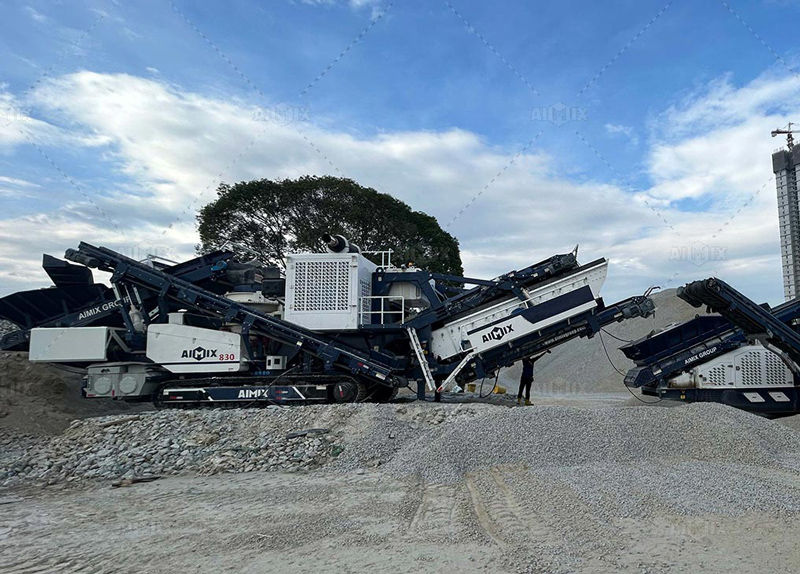
Sophisticated algorithms can detect subtle changes in feed material hardness or size distribution by analyzing power draw and pressure patterns. The system can then make micro-adjustments to the track crusher's closed-side setting (CSS) or the feeder rate to maintain optimal throughput and product gradation, compensating for material variability without operator intervention. This real-time process optimization ensures the plant operates at its peak efficiency envelope, maximizing yield while minimizing energy consumption per ton and undue wear on components. The machine becomes self-regulating, applying a consistent, engineered fracture process regardless of external fluctuations.
Data-Driven Logistics and Fleet Synchronization
Industry 4.0 extends its influence to the logistical orchestration of mobile plant fleets. GPS tracking integrated with fuel consumption monitoring provides a granular view of operational geography and efficiency. Fleet managers can analyze site-specific data, comparing fuel burn and production output across different locations to identify best practices or problematic conditions. This enables precise job costing and informed bidding for future work based on historical performance metrics in similar terrains or material types.
Furthermore, this connectivity enables a predictive approach to maintenance and parts logistics. By transmitting operational health data to a central platform, the system can forecast wear-part life with high accuracy based on actual tonnage processed and material abrasiveness, not just elapsed time. This allows for just-in-time ordering of crusher liners, screen meshes, and other consumables, ensuring parts arrive as needed without maintaining excessive on-site inventory. Maintenance transitions from a reactive or scheduled exercise to a condition-based strategy, where service is performed precisely when data indicates it is required, maximizing uptime and component utilization.
Advanced Quality Assurance Through Machine Vision and AI
Quality control is being revolutionized by the integration of advanced sensor technologies, most notably machine vision systems. High-resolution cameras mounted over discharge conveyors perform continuous particle image analysis. Artificial intelligence algorithms, trained on vast libraries of aggregate imagery, can assess particle size distribution, shape (cubicity vs. flakiness), and even identify deleterious contaminants like clay balls, wood, or metal in real-time.
This provides an instantaneous, closed-loop feedback mechanism. If the system detects an upward trend in oversize material, it can signal the primary crusher to adjust its CSS. If flakiness exceeds specification for a premium concrete aggregate product, parameters can be modified, or material can be diverted. This real-time quality assurance ensures a consistent, specification-grade product directly from the plant, eliminating the lag and sampling error inherent in traditional lab-based sieve analysis. It guarantees product integrity and allows producers to confidently certify their material for high-value applications.

Systemic Integration with the Digital Construction Ecosystem
The ultimate expression of Industry 4.0 alignment is the seamless integration of the mobile plant into the broader digital construction workflow. Through application programming interfaces (APIs), plant data can be shared directly with Building Information Modeling (BIM) platforms and project management software. Production totals and quality certificates can be automatically logged against specific project phases, providing an immutable digital record for compliance and lifecycle management.
Looking forward, the concept of the digital twin becomes paramount. A high-fidelity virtual model of the mobile plant, fed by its real-time IoT data, can be used for advanced simulation. Operators and managers can test different feed scenarios, evaluate the impact of new screen configurations, or conduct virtual training for complex procedures without risking actual equipment or production. This systemic integration positions the mobile stone crusher plant not as a standalone piece of equipment, but as a responsive, intelligent component within a fully digitized value chain, capable of adapting its output to the precise and dynamic needs of the modern construction project. It is a complete convergence of mechanical force and digital intelligence.


Comments